
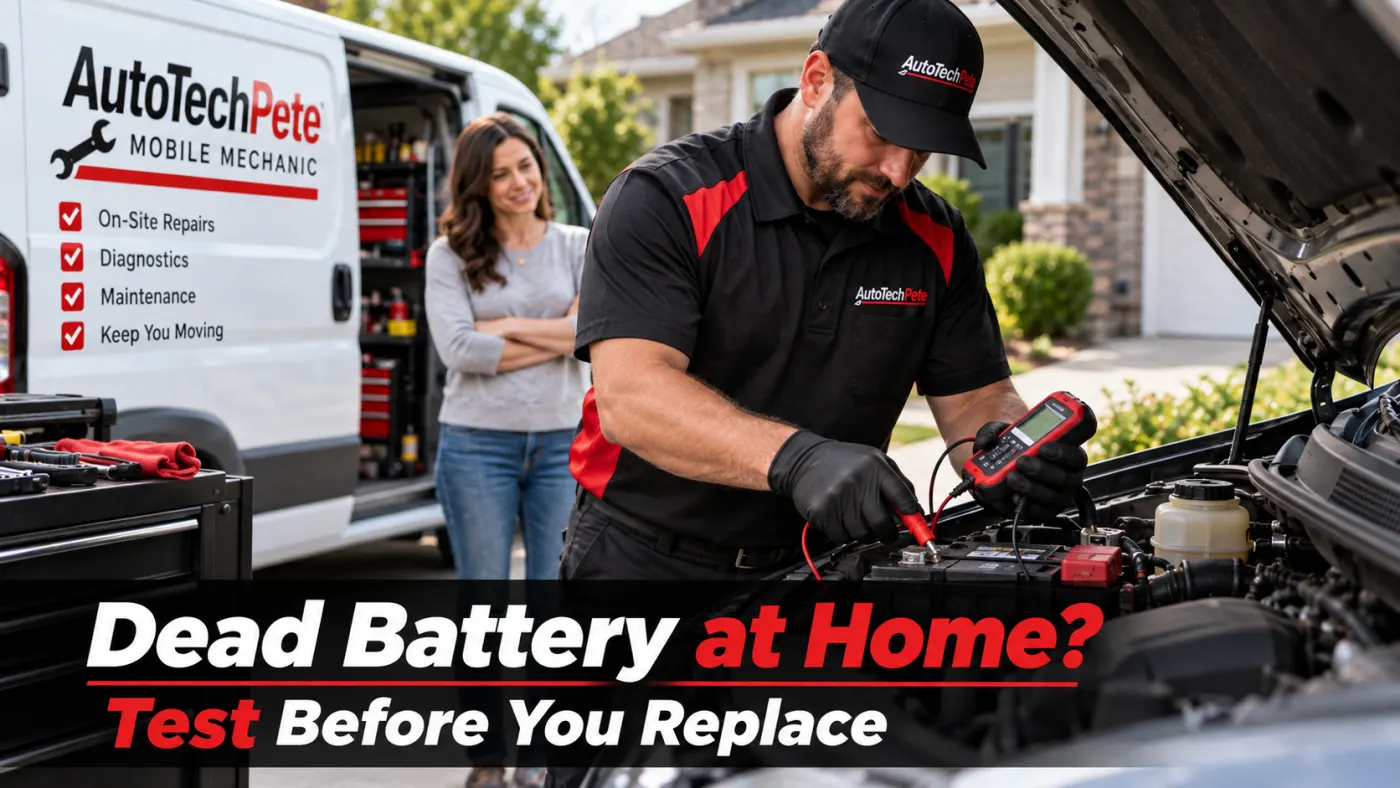
A Dead Battery Is the Most Common Assumption
You walk out to the driveway, turn the key or press the start button, and the vehicle does not start the way it normally does.
Maybe the engine cranks slowly. Maybe the dashboard lights flicker. Maybe you hear one click and then nothing.
Most people immediately assume the battery is dead.
Sometimes it is, but a no-start condition can also be caused by corroded battery terminals, a loose connection, a charging system problem, a starter issue, or something slowly draining the battery while the vehicle is parked.
Replacing the battery without testing first can mean spending money on a part that was never the actual problem.
Signs That Point Toward the Battery
Pay attention to exactly what the vehicle does when you try to start it.
Slow or Labored Cranking
If the engine turns over noticeably slower than normal, the battery may not have enough charge or capacity to start the engine properly.
This becomes more common as batteries age and during colder weather.
Lights Dim When Trying to Start
If the dashboard lights come on normally but dim heavily when you try to start the engine, the battery voltage may be dropping under load.
A weak battery can cause this, but so can a poor battery cable connection.
No Lights, No Sound, No Response
If nothing electrical appears to work, the battery may be completely discharged.
A loose or disconnected battery cable, poor connection, or electrical power supply problem can cause similar symptoms.
One Click When You Try to Start
A single click does not automatically mean the starter has failed.
It can also happen when the battery does not have enough power to operate the starter or when a battery connection cannot carry enough current.
The way the lights behave during the click can provide another useful clue.
The Battery Keeps Dying
If the vehicle starts after being charged or jump-started but keeps going dead again, the battery may not be the original cause.
A charging system problem or electrical drain may be preventing the battery from staying charged.
Safe Checks You Can Make at Home
If it is safe to open the hood, there are a few things you can look at before replacing anything.
Check the Battery Terminals
Look for heavy white, green, or blue corrosion around the battery posts and cable connections.
Also check whether either terminal can move by hand.
A loose or badly corroded connection can prevent enough electrical current from reaching the starter even when the battery itself is good.
Look for Battery Damage
A swollen battery case, cracks, leaking fluid, excessive heat, or a strong sulfur smell can indicate a damaged battery.
Do not attempt to jump-start a battery that is visibly swollen, cracked, frozen, or leaking.
Think About What Happened Before the Problem Started
Did the vehicle sit unused for several days?
Was an interior light left on?
Was a charger, dash camera, or accessory plugged in?
Did the problem begin after electrical work or a recent repair?
These details can help narrow down the cause much faster.
Why a Jump Start Does Not Always Solve the Problem
A jump start may get the engine running, but it does not explain why the battery went dead.
If the alternator is not properly charging the battery, the vehicle can lose power again.
If something is draining the battery while the vehicle is parked, it may be dead again the next morning.
If the battery itself has failed internally, it may not hold a charge even after driving.
That is why testing is more useful than simply replacing the battery.
What Battery Testing Checks
A proper starting and charging system diagnosis can look at several things.
Battery Condition
A battery test checks whether the battery can still supply the amount of power needed to start the engine.
A battery can sometimes show normal voltage and still fail when placed under load.
Charging System
Once the engine is running, charging voltage can be checked to make sure the alternator is supplying power correctly.
If the charging system is not working properly, even a new battery can eventually go dead.
Battery Connections
Loose, dirty, or corroded terminals can create enough resistance to cause starting problems.
Connections and cables should be inspected before replacing major components.
Electrical Drain
When a battery repeatedly goes dead while the vehicle is parked, further testing may be needed to determine whether something is continuing to use power when the vehicle is turned off.
Mobile Battery Testing and Replacement
A mobile mechanic can perform many of these tests right where the vehicle is parked.
AutoTechPete can inspect the battery, terminals, starting system, and charging system before recommending replacement.
If the battery fails testing, it can usually be replaced on-site.
If the battery tests good, the diagnosis can continue instead of replacing a good part and hoping the problem goes away.
When Should a Car Battery Be Replaced?
Many automotive batteries last around three to five years, although battery life can vary considerably depending on the vehicle, weather, driving habits, and electrical demands.
Heat and cold can both affect battery life.
Frequent short trips can also make it harder for the charging system to fully restore the battery after starting the engine.
If your battery is several years old and you notice the vehicle beginning to crank slower than it used to, testing it before it completely fails can help avoid getting stuck with a no-start.
Get Your Battery Tested at Home
AutoTechPete provides mobile battery testing, starting and charging system diagnosis, and battery replacement throughout Sullivan County and selected nearby areas of Ulster, Delaware, and Orange counties.
The goal is to find the actual cause before replacing parts.
Call or text 329-228-7822 and describe what the vehicle is doing.
You can also submit a service request through AutoTechPete.com and enter your ZIP code to check service availability in your area.
Can You Test My Battery Without Replacing It?
Yes.
Testing comes first.
If the battery passes testing, the next step is checking the connections, charging system, starting system, or other possible causes.
Do I Need to Buy a Battery Before the Appointment?
No.
Provide the year, make, model, and symptoms first.
If testing confirms that the battery needs to be replaced, the replacement options and pricing can be discussed before any work is approved.
What If the Battery Is Not the Problem?
That is exactly why testing first matters.
Starting system problems, alternator issues, poor electrical connections, and battery drains can create symptoms that look very similar to a bad battery.
The results of the testing help determine what should be checked next.
How Long Does Mobile Battery Replacement Take?
Most straightforward battery replacements can be completed in less than an hour once testing confirms the battery has failed.
Some vehicles place the battery under a seat, inside the trunk, beneath covers, or in other harder-to-access locations, which can increase the amount of time needed.