
## Grinding is a symptom that deserves prompt attention
A coarse metal-on-metal sound while braking is different from a light morning squeak. One common cause is brake-pad friction material worn thin enough that the metal backing plate or wear hardware contacts the rotor. Continuing to drive in that condition can damage the braking surface and increase the repair. It is not the only possibility: heavy surface rust after a vehicle sits, a stone or debris near a shield, loose hardware, a sticking caliper, a damaged rotor, parking-brake components, or a wheel bearing can produce noises a driver describes as grinding.
The timing of the sound matters. Noise only while the brake pedal is pressed focuses attention differently than noise that continues while coasting. A scrape that changes when turning can involve a shield, wheel-end part, or bearing. A brief rough sound on the first few stops after rain may be surface corrosion, but noise that remains, becomes louder, or comes with changed braking needs inspection.
## Decide whether the vehicle should stay parked
Do not continue driving if stopping ability is reduced, the pedal sinks or feels unusually soft, the vehicle pulls strongly, a brake or ABS warning appears with changed braking, fluid is visible near a wheel, smoke or a burning smell is present, or one wheel becomes extremely hot. A severe grinding sound, sudden change, or feeling that a wheel is loose also justifies stopping and arranging safe transportation or towing. Personal safety matters more than reaching an appointment under the vehicle’s own power.
If the pedal feels normal and the sound is mild, avoid unnecessary driving and hard stops until it is inspected. Do not reach through a wheel or touch the rotor or caliper after driving; brake parts can be hot enough to burn. Do not add unknown fluid or spray lubricant near friction surfaces.
## What an inspection should look for
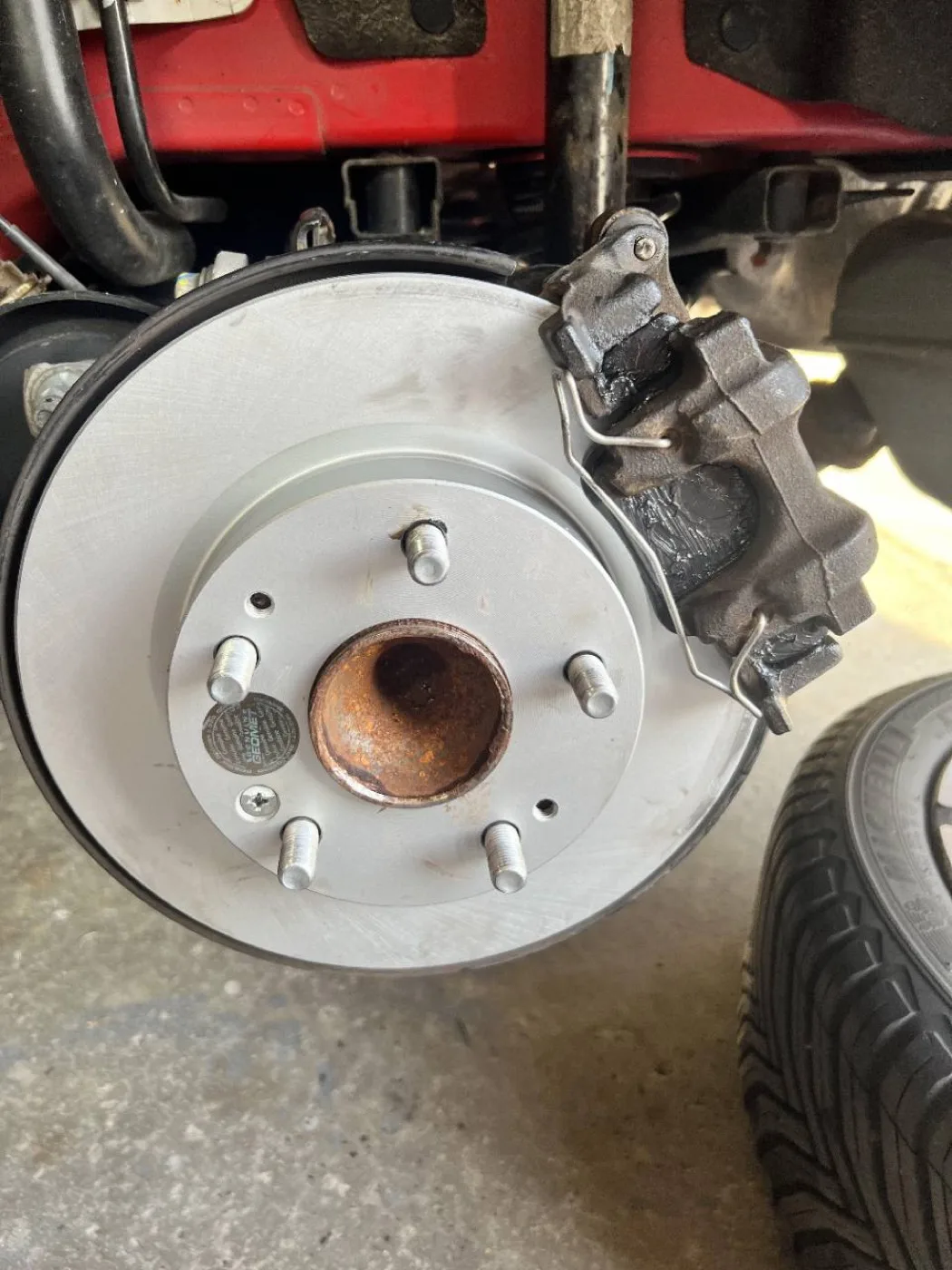
An inspection compares inner and outer pad thickness because they do not always wear equally. The rotor is checked for scoring, cracking, heat damage, thickness, and other condition. Caliper slides, piston behavior, hardware, hoses, and visible leaks help explain why wear occurred. The dust shield, parking-brake parts, hub, and bearing may need attention when the noise is not coming from the pad-to-rotor surface.
The cause matters as much as the worn part. Installing pads on a wheel with a sticking caliper or seized slide can quickly recreate the problem. Likewise, assuming that every scrape is a brake pad can miss a shield or bearing concern. Pete explains what is visible and what testing supports before outlining the repair.
## Why the rotor may be part of the repair
Pads and rotors work as a friction pair. Deep grooves, metal transfer, heat spots, cracks, or insufficient thickness can prevent new pads from working smoothly. Rotor decisions should be based on measurement, condition, vehicle specifications, and the repair plan—not on a universal rule. If caliper or hydraulic work is needed, the estimate should distinguish those items from routine pad and rotor service.
## Information and photos that help
In a request, say whether the noise comes from the front or rear, one side or both, only while braking or all the time, and whether the pedal, steering wheel, or whole vehicle vibrates. Mention pulling, heat, warning lights, fluid, recent brake work, or time the vehicle sat unused. A photo through the wheel may show heavy scoring, but never crawl under an unsupported vehicle or remove a wheel just to photograph it.
Brake sounds cannot be diagnosed reliably from text alone. This guide helps describe the urgency and next step; the actual vehicle must be inspected before a safe repair decision is made.